Showing posts with label history. Show all posts

Famous Battles and Generals - Quiz Questions

  1. Which enemy did Drake refuse to fight until he had finished his game of bowls?
  2. “The boy stood on the burning deck” – in which battle and on which ship was he?
  3. Which famous German Battleship was destroyed in the North Atlantic in May, 1941?
  4. (a) Many Warships were sunk by the Japanese in December 1941, in which U.S. naval Base?
    (b) Which agreement did Hitler violate by crossing the Czech border?
  5. State who commended the following forces at the Battle of Waterloo:
    (a) The English Forces
    (b)The opposing Forces
  6. (a) At which battle was “The Charge of The Light Brigade”?
    (b) During which war did Florence Nightingale Begin her work?
  7. (a) The news of a Greek victory was carried to Athens by an Olympian runner who died after delivering the message. Where was the Battle fought?
    (b) Which general of Ancient Carthage is associated with his march across the Alps, including elephants?
  8. After a distinguished military career, he became President of the U.S.A. in 1952. What was his name?
  9. (a) Who led the renowned “Chindits” in guerilla operations against the Japanese in Burma?
    (b) Which Boer General became the first premier of the South African Union?
  10. (a) Which city was captured during the Greek-Trojan War by a trick involving a wooden horse?
    (b) When and where did Caesar defeat Pompey?
  11. Which Spartan General was responsible for ending the Peloponnesian War?
  12. Who fought the Opium war of 1839-42?
  13. (a) Name the revolutionary leader who overthrew the Batista regime in Cuba.
    (b) This general, called the “man of destiny” in his country, led the “Free French” fighting forces during World War II and ended the post-war political confusion in his country.
  14. This king won such a costly victory that his name is now associated with any victory which costs more than it is worth.
  15. (a) Lord Nelson was killed and the French Fleet destroyed at the same battle. What was that battle?
    (b) Who commanded the Allied Forces at the Battle of Alamein?
  16. Which European King and General built an empire in his own lifetime stretching from the Mediterranean to North-west India, yet died at the age of 33?
  17. Which year saw the ‘Emergence of Bangladesh’?
  18. (a) Name the Chinese President who was forced by the Communists to retire in 1949.
    (b) Who was the leader of the Vietnam revolutionary nationalist party of Indo-China and later the President of North Vietnam?
  19. State who the following were:
    (a) Samurai
    (b) Shogun
    (c) Kamikaze
  20. Who “held the bridge” to prevent the Etruscans crossing the Tiber to Rome?

Answers

  1. The Spanish Armada
  2. The Battle of the Nile (1798). The boy was on the French ship “Orient”.
  3. Bismark
  4. (a) Pearl Harbor
    (b) The Munich Agreement
  5. (a) The Duke of Wellington commended the English Army.
    (b) Napoleon Bonaparte commended the opposing army.
  6. (a) The Battle of Balaclava in 1854)
    (b) The Crimean War
  7. (a) Marathon 490 B.C.
    (b) Hannibal
  8. Dwight D. Eisenhower
  9. (a) Major General Orde Charles Wingate
    (b) Louis Botha
  10. (a) Troy
    (b) At Pharsalus in 48 B.C.
  11. Lysander
  12. Britain and China
  13. (a) Fidel Castro
    (b) General Charles de Gaulle
  14. Pyrrhus
  15. (a) The Battle of Trafalgar, 1805
    (b) Field-Marshal Montgomery
  16. Alexander, the Great
  17. At the end of the 16 day Indo-Pakistan War in 1971, the Pakistani army surrendered on December 1 6, 1971 and Bangladesh was born.
  18. (a) General Chiang Kai-Shek
    (b) Dr. Ho Chi-Minh
  19. (a) Legendary warriors, Japanese army officers
    (b) Military governors or dictators
    (c) Suicide Pilots
  20. Horatius

Astronomers Discover New Star

Astronomers studying the Milky Way have discovered a large number of previously-unknown regions where massive stars are being formed. Their discovery provides important new information about the structure of our home Galaxy and promises to yield new clues about the chemical composition of the Galaxy.

"We can clearly relate the locations of these star-forming sites to the overall structure of the Galaxy. Further studies will allow us to better understand the process of star formation and to compare the chemical composition of such sites at widely different distances from the Galaxy's center," said Thomas Bania, of Boston University.


Bania worked with Loren Anderson of the Astrophysical Laboratory of Marseille in France, Dana Balser of the National Radio Astronomy Observatory (NRAO), and Robert Rood of the University of Virginia. The scientists presented their findings to the American Astronomical Society's meeting in Miami, Florida.

The star-forming regions the astronomers sought, called H II regions, are sites where hydrogen atoms are ionized, or stripped of their electrons, by the intense radiation of the massive, young stars. To find these regions hidden from visible-light detection by the Milky Way's gas and dust, the researchers used infrared and radio telescopes.

"We found our targets by using the results of infrared surveys done with NASA's Spitzer Space Telescope and of surveys done with the National Science Foundation's (NSF) Very Large Array (VLA) radio telescope," Anderson said. "Objects that appear bright in both the Spitzer and VLA images we studied are good candidates for H II regions," he explained.

The astronomers then used the NSF's giant Robert C. Byrd Green Bank Telescope (GBT) in West Virginia, an extremely sensitive radio telescope. With the GBT, they were able to detect specific radio frequencies emitted by electrons as they recombined with protons to form hydrogen. This evidence of recombination confirmed that the regions contained ionized hydrogen and thus are H II regions.

Further analysis allowed the astronomers to determine the locations of the H II regions. They found concentrations of the regions at the end of the Galaxy's central bar and in its spiral arms. Their analysis also showed that 25 of the regions are farther from the Galaxy's center than the Sun.

"Finding the ones beyond the solar orbit is important, because studying them will provide important information about the chemical evolution of the Galaxy. There is evidence that the abundance of heavy elements changes with increasing distance from the Galactic center. We now have many more objects to study and improve our understanding of this effect," Bania said.

The National Radio Astronomy Observatory is a facility of the National Science Foundation, operated under cooperative agreement by Associated Universities, Inc

Source: Science Daily

Origin and Names of the States of USA

  1. ALABAMA: Possibly from the Creek Indian word alibamo, meaning "we stay here".
  2. ALASKA: From the Aleutian word alakshak, which means "great lands," or "land that is not an island".
  3. ARIZONA: Taken either from the Pima Indian words ali shonak, meaning "little spring," or from the Aztec word arizuma, meaning "silver-bearing".
  4. ARKANSAS: The French somehow coined it from the name of the Siouan Quapaw tribe.
  5. CALIFORNIA: According to one theory, Spanish settlers names it after a utopian society described in a popular 16th-century novel called Serged de Esplandian.
  6. COLORADO: Means "red" in Spanish. The name was originally applied to the Colorado River, whose waters are reddish with canyon clay.
  7. CONNECTICUT: Taken from the Mohican word kuenihtekot, which means "long river place".
  8. DELAWARE: Named after Lord De La Warr, a governor of Virginia. Originally used only to name the Delaware River.
  9. FLORIDA: Explorer Ponce de Leon named the state Pascua Florida – "Flowery Easter" on Easter Sunday in 1513.
  10. GEORGIA: Named after King George II of England, who charted the colony in 1732.
  11. HAWAII: An English adaptation of the native word Owyhee, which means "homeland".
  12. IDAHO: Possibly taken from the Kiowa Apache word for the Comanche Indians.
  13. ILLINOIS: The French bastardization of the Algonquin word illini, which means "men".
  14. INDIANA: Named by English-speaking settlers because the territory was full of Indians.
  15. IOWA: The Sioux word for "beautiful land," or "one who puts to sleep".
  16. KANSAS: Taken from the Sioux word for "south wind people," their name for anyone who lived south of Sioux territory.
  17. KENTUCKY: Possibly derived from the Indian word kan-tuk-kee, meaning "dark and bloody ground." Or kan-tuc-kec, "land of green reeds", or ken-take, meaning "meadowland".
  18. LOUISIANA: Named after French King Louis XIV.
  19. MAINE: The Old French word for "province".
  20. MARYLAND: Named after Queen Henrietta Maria, wife of English King George I.
  21. MASSACHUSETTS: Named after the Massachusetts Indian tribe. Means "large hill place".
  22. MICHIGAN: Most likely from the Chippewa word for "great water." micigama.
  23. MINNESOTA: From the Sioux word for "sky tinted" or "muddy water".
  24. MISSISSIPPI: Most likely taken from the Chippewa words mici ("great") and zibi ("river").
  25. MISSOURI: From the Algonquin word for "muddy water".
  26. MONTANA: Taken from the Latin word for "mountainous".
  27. NEBRASKA: From the Otos Indian word for "broad water".
  28. NEVADA: Means "snow-clad" in Spanish.
  29. NEW HAMPSHIRE: Capt. John Mason, one of the original colonists, named it after his English home county of Hampshire.
  30. NEW JERSEY: Named after the English Isle of Jersey.
  31. NEW MEXICO: The Spanish name for the territory north of the Rio Grande.
  32. NEW YORK: Named after the Duke of York and Albany.
  33. NORTH AND SOUTH CAROLINA: From the Latin name Carolus; named in honor of King Charles I of England.
  34. NORTH AND SOUTH DAKOTA: Taken from the Sioux word for "friend," or "ally".
  35. OHIO: Means "great," "fine" or "Good River" in Iroquois.
  36. OKLAHOMA. The Choctaw word for "red man".
  37. OREGON: Possibly derived from Ouaricon-sint, the French name for the Wisconsin River.
  38. PENNSYLVANIA: Named after William Penn, Sr., the father of the colony’s founder, William Penn. Means "Penn’s woods".
  39. RHODE ISLAND: Named "Roode Eylandt" (Red Island) because of its red clay.
  40. TENNESSEE: Named after the Cherokee tanasi villages along the banks of the Little Tennessee River.
  41. TEXAS: Derived from the Caddo Indian word for "friend," or "ally."
  42. UTAH: Means "upper," or "higher," and was originally the name that Navajos called the Shoshone tribe.
  43. VERMONT: A combination of the French words vert ("green") and mont ("mountain").
  44. VIRGINIA AND WEST VIRGINIA: Named after Queen Elizabeth I of England, the "virgin" queen, by Sir Walter Raleigh in 1584.
  45. WASHINGTON: Named after George Washington.
  46. WISCONSIN: Taken from the Chippewa word for "grassy place".
  47. WYOMING: Derived from the Algonquin word for "large prairie place".

Cheerleading


Cheerleading is an activity that uses organized routines made up of elements from gymnastics, dance or performance stunting/action to cheer on sports teams at games and matches, and/or as a competitive sport. A cheerleading performer is called a cheerleader. It is most common in North America, but has spread elsewhere in other countries.

History of Cheerleading


Cheerleading first started at Princeton University in the 1880s with the crowd chant, as a way to encourage school spirit at football games. A few years later, Princeton graduate Thomas Peebles introduced the idea of organized crowd chanting to the University of Minnesota in 1894, but it was not until 1898 that University of Minnesota student Johnny Campbell stood in front of the crowd, and directed them in a chant, making Campbell the very first cheerleader. Soon after that, the University of Minnesota organized a "yell leader" squad of 6 male students. Although it is estimated that 97% of today's cheerleading participants are female, cheerleading started out as an all-male activity. Females started to participate in cheerleading in the 1920s, due to limited availability of female collegiate sports. This is also when gymnastics and tumbling were incorporated into the cheers, the University of Minnesota was first to do this. By the 1940s, it was a largely female activity.

Cheerleading is most closely associated with American football, and to a lesser degree basketball. Sports such as soccer, ice hockey, volleyball, baseball, and wrestling rarely have cheerleaders. The only Major League Baseball team with cheerleaders as of 2006 is the Florida Marlins.

Cheerleading GirlIn 1948, Lawrence "Herkie" Herkimer formed the National Cheerleaders Association (NCA) as a way to hold cheerleading clinics. The National Cheerleaders Association held its first clinic in 1949 with 52 girls in attendance. The next year, the clinic had grown to 350 cheerleaders. By the 1950s, most American high schools had formed cheerleading squads. By the 1960s, cheerleading had grown to be a staple in American high school and collegiate sports. Organized cheerleading competitions began to crop up with the first ranking of the "Top Ten College Cheerleading Squads" and "Cheerleader All America" awards given out by the International Cheerleading Foundation (now the World Cheerleading Association or WCA) in 1967. In 1978, America was introduced to competitive cheerleading by the first broadcast of Collegiate Cheerleading Championships on CBS.

In the 1960s National Football League (NFL) teams began to organize professional cheerleading teams. It was the Dallas Cowboys Cheerleaders who gained the spotlight with their revealing outfits and sophisticated dance moves, which debuted in the 1972-1973 season, but were first seen widely in Super Bowl X (1976). This caused the image of cheerleaders to permanently change, with many other NFL teams emulating them. Most of the professional teams' cheerleading squads would more accurately be described as dance teams by today's standards; as they rarely, if ever, actively encourage crowd noise or perform modern cheerleading moves.

The 1980s saw the onset of modern cheerleading with more difficult stunts and gymnastics being incorporated into routines. Cheerleading organizations such as the American Association of Cheerleading Coaches and Advisors (AACCA) started applying safety guidelines and offering courses on safety training for coaches and sponsors. In 2003, the National Council for Spirit Safety and Education (NCSSE) was formed to offer safety training for youth, school, all star and college coaches. The NCAA requires college cheer coaches to successfully complete a nationally recognized safety training program. The NCSSE or AACCA certification programs are both recognized by the NCAA.

According to latest studies, there are nearly 3.5 million cheerleaders in the USA alone, and half as many dance team members and gymnasts, taking the total number of participants involved in cheerleading and allied activities in the USA to above 5 million. There are also tens of thousands of cheerleaders in Europe, Central America, Australia, and Asia.

Source: Knowledgebase-script

History Of Valentine's day

February has long been a month of romance. It is the month associated with Valentine's Day celebrations. We have, time and again, heard the name St. Valentine being uttered before us in this season of love. But just who is this St. Valentine? Why is this month associated with love and romance? Learn about St. Valentine, how Valentines day came into practice as it is today. The origin of this lovers day goes back as early as 270 A.D and started with the clash between a kindly priest and a mighty ruler. To know more, just read on and discover the true meaning of this festival. If you like our little article about the splendid history of Valentine's Day.Happy Lovers Day.

Indian Independence

The Indian independence movement resulted in India’s liberation from the British rule. The joint efforts of many underground Indian political parties, heroic freedom fighters, philosophical ideologies and petty rebellions formed the story of how India got its independence. The 1947 Indian independence has been celebrated every year in the country on 15th August. 15th August is celebrated ever since 1947 as the Indian Independence Day.

Public dissatisfaction with the British rule, their policy of divide and rule and that of sabotaging basic civil liberties of resident Indians and their human rights (exemplified in the Rowlett act) and insensitivity towards Indian cultural consciousness led to the upsurge of the Indian independence movement which overthrew the British rule.

Mohandas Karamchand Gandhi in known as the father of India, all over the world. Gandhi and the Independence of India are intimately connected to each other. His non- cooperation movement along with the amazing facts and philosophy of non-violence and numerous satyagrahas catapulted the Indian masses towards their freedom from the British rule.

Gandhi was the true hero of the independence struggle and a very highly principled man who carried out a struggle for independence with the strength of his values and morals.

The first Indian protest against the British rule took place in 1857 when soldiers of British East India Company rebelled under the leadership of Mangal Pandey against the tyranny of the company and its disrespect for Indian culture. The revolt was crushed with the British separating the princely states from British India. This was typical of their divide and rule policy.

The movement for Indian Independence reached its culmination between 1918 and 1922 with a series of non-violent efforts of civil disobedience by the Indian National Congress under the guidance of Mahatma Gandhi. This set the stage for India’s final liberation from the British Raj and led to its partition with Pakistan on the mid-night of 15th August 1947. Partition was the price India had to pay for its liberation.

History Of Amazon.com

Jeff Bezos coined the term Amazon.com from the earlier name Cadabra.com. It was the excellent way to present large volume online bookstore. But did he have hidden intentions? It is hard to believe but in the early Internet days, when Yahoo was dominant search engine, results on one page were listed alphabetically. Amazon would always appear above its competition for a specific keywords. This could be a breaking point for Jeff to expand and became what it is today

History of Father's Day

Father's Day is a day of commemoration and celebration of Dad. It is a day to not only honor your father, but all men who have acted as a father figure in your life whether as Stepfathers, Uncles, Grandfathers or Big Brothers.

In the United States, the first modern Father's Day celebration was held on July 5, 1908, in Fairmont, West Virginia. It was first celebrated as a church service at Williams Memorial Methodist Episcopal Church South, now known as Central United Methodist Church. Grace Golden Clayton, who is believed to have suggested the service to the pastor, is believed to have been inspired to celebrate fathers after the deadly mine explosion in nearby Monongah the prior December. This explosion killed 361 men, many of them fathers and recent immigrants to the United States from Italy. Another possible inspiration for the service was Mother's Day, which had recently been celebrated for the first time in Grafton, West Virginia, a town about 15 miles away.

Another driving force behind the establishment of the integration of Father's Day was Mrs. Sonora Smart Dodd, born in Creston, Washington. Her father, the Civil War veteran William Jackson Smart, as a single parent reared his six children in Spokane, Washington. She was inspired by Anna Jarvis's efforts to establish Mother's Day. Although she initially suggested June 5, the anniversary of her father's death, she did not provide the organizers with enough time to make arrangements, and the celebration was deferred to the third Sunday of June. The first June Father's Day was celebrated on June 19, 1910, in Spokane, WA.

Unofficial support from such figures as William Jennings Bryan was immediate and widespread. President Woodrow Wilson was personally feted by his family in 1916. President Calvin Coolidge recommended it as a national holiday in 1924. In 1966, President Lyndon Johnson made Father's Day a holiday to be celebrated on the third Sunday of June. The holiday was not officially recognized until 1972, during the presidency of Richard Nixon.

In recent years, retailers have adapted to the holiday by promoting male-oriented gifts such as electronics, tools and greeting cards. Schools and other children's programs commonly have activities to make Father's Day gifts.

So, In short, Happy Fathers Day to all of you Dad's out there! Have a fun-filled day with your families and friends!

History of Tamil Nadu

Tamil Nadu, the cradle of Dravidian culture, has a very rich history dating back to thousands of years. Some anthropologists and historians believe that human activity in this region began as early as 300, 000 years ago. It is also suggested that the first Dravidians were part of the early Indus Valley Civilization and had to migrate southwards to escape aggressive Aryan advancements around 1500 BC. However, the recorded history of South India, including Tamil Nadu, is available only from the 4th century BC onwards.

The early history of Tamil Nadu, between the periods of 1st - 9th century AD, had been dominated by the Cheras, Cholas, Pallavas and Pandyas rulers. All these dynasties engaged in continual skirmishes; but their steady patronage of arts served the expansion of Dravidian culture. It is also considered the golden period of Tamil literature famously known as " the Sangam Age", which lasted till the end of 3rd century AD. The Sangam literature provides a deep insight into the cultural, social and economic conditions of that period.

The early Cholas ruled Tamil Nadu between 1st and 4th centuries AD. The Cholas ruled the present Tanjore and Tiruchirapalli (Trichy) region and were known for their excellent military expertise. At the peak of their glory, the Chola kings expanded their influence as far as Ceylon (Sri Lanka) in the south and hundreds of kilometers across the northern region. The Cholas were great lovers and patrons of art and architectures in Tamil Nadu. The Brahadeeswara Temple of Tanjore (an UNESCO's World Heritage Site) is a classical example of the magnificent architecture of the Chola kingdom.

During the second half of the 4th century AD, Pallavas emerged into prominence and dominated the region for next 400 years. They ruled the most of the present day northeastern Tamil Nadu, with Kanchipuram emerging as the most important center of their political and cultural activities. During Pallavas, the Dravidian architecture reached its epitome. Popularly referred as "the temple builders," the Pallavas constructed a large number of temples including amazing temples of Mahabalipuram, Kailasanathar Temple at Kanchipuram and the Kapaleswarar Temple at Chennai. In the 6th century AD they defeated the Cholas and their authority reached as far as Sri Lanka. But, the internal feud led a gradual decline of the Pallava dynasty and they lost their supremacy by the end of the 9th century AD, when Aditya Chola defeated them.

The Chola Empire extended its boundaries up to Orissa and parts of West Bengal in the north and to Ceylon in the south by defeating the Pandyas. By the end of 11th century AD, Chalukyas- another famous dynasty of south India- rose into prominence together with the Cholas, but couldn't stand the mighty Chola kingdom for long time. Eventually, Cholas became prominent and ruled Tamil Nadu till the end of the 13th century AD. As Cholas declined, the Pandyas once again emerged into prominence, but soon they were subdued by Muslim invasion from the north, in the beginning of the 14th century AD. The invasion completely destroyed the Chola and Pandya supremacy in the region and led to the establishment of the famous Bahmani Kingdom.

The supremacy of the Bahmani Kingdom in the south was not without challenges as the Vijayanagar Empire emerged as an alternative power and posed a major challenge to Muslim advancement to the south. But, the 1564 battle of Talikota led to the victory of the Muslims and the formidable Vijayanagar Empire came to an end. The Muslims divided the empire into many small kingdoms and was given to the Nayaks to rule. The Nayaks of Madurai and Tanjore were most prominent of them all. The reconstructed some of the oldest temples in the region. The Nayaks were subdued once the Europeans entered into fray for supremacy in the region, with later emerging as victorious.

The East India Company established its factory in Chennai in 1640, which emerged as the most important trading post for the company. Under the British colonial rule, most of the south India was integrated into the region called Madras Presidency. But the British supremacy in the south was not without challenges. The French and Dutch also entered into the fray for supremacy in the region. The British had to fight a number of battles with them, notably the French at Wandiwash in 1760, and the Dutch at Tharangambadi, which led to complete surrender of the Dutch, and reduced the French dominations in India to Pondicherry.

Tamil Nadu played a significant role in India's freedom struggle. After India's independence in 1947, Madras Presidency became Madras State in 1953. In 1956, under the states Reorganization Act, the Kannada-speaking areas were transferred to Mysore (now Karnataka), and the Malayalam areas to Kerala on linguistic lines. In 1968, the name of the state was changed from Madras to Tamil Nadu.

Tamilnadu - Full Details

History:

Tamil Nadu is the land of the Tamils and it has a history that dates back to several thousand years. It is a land where traditions and culture blend and continue to live in harmony. The state abounds in monuments and temples that are ancient and each has its own story of religious, artistic and cultural accomplishment and specialty waiting to be heard. Are there answers to be found on its beaches and hill stations as they welcome the traveler? We are sure you will form your own opinions and have your own perceptions as we welcome you to this enchanting and ancient Dravidian land, in the extreme south of peninsular India. Tamil Nadu has a long coastline that stretches nearly a 1000 kms. The Coromandel Coast, along the Bay of Bengal, boasts of many ideal locations for sun and surf. Golden sands of the beach are dotted with coconut palm and casuarina groves. The sea washes ashore pebbles and shells and the gentle breeze sways the yachts and catamarans into the deeper waters of the sea and the waters form small dunes on the shore. Crabs play hide-and-seek by coming out of one burrow, and taking refuge in another. Sea gulls hover in the sky and then rest on the sails of the fishing boats. There are many more breathtaking sights that will please you and hold you spell bound in Tamil Nadu.

Food :

Tamil Nadu has a wide range of vegetarian and non-vegetarian delicacies to offer. The food here gets its flavor from a host of spices and condiments used in Tamil Nadu. Coconut, tamarind and asafoetida are a must for almost all vegetarian recipes. Garam masala is avoided in Tamil cuisine. In Tamil Nadu Coconut oil is normally used as the medium of cooking. Chutneys and mixed spice are served in the lunch and enhance the taste of the meal.

In Tamil Nadu, a typical meal consists of rice (mostly steam ed), lentils, grains and vegetables. Chettinad cuisine of Tamil Nadu is particularly famous all over the country. This cuisine is hot and spicy and provides delectable variety in mutton, chicken and fish dishes. Chettinad Pepper Chicken is one of the most famous dishes in Tamil Nadu. The Tamil style of Mughali food can be tasted in the Biriyanis and Paya. Paya is a type of spiced trotters broth and is eaten with either Parathas or Appam.

In Tamil Nadu cuisine, breakfast or tiffin includes idly(steamed rice cakes), dosai (a pancake made from a batter of rice) and lentils crisp fried on a pan, vada(deep fried doughnuts made from a batter of lentils), pongal (a mash of rice and lentils boiled together and seasoned with ghee, cashew nuts, pepper and cummin seed), uppuma(cooked semolina seasoned in oil with mustard, pepper, cumin seed and dry lentils). Most of the dishes in Tamil Nadu are eaten with coconut chutney, sambar (seasoned lentil broth) and mulaga podi (a powdered mix of several dried lentils eaten with oil).

The Tamil Lunch or meals consists of cooked rice served with different kinds of vegetable dishes, Sambar, chutneys, Rasam (a hot broth made with tamarind juice and pepper) and curd(yogurt). The non-vegetarian lunch includes curries or dishes cooked with mutton, chicken or fish. Tamil meals are incomplete without crisp Papads or Appalam.

Tamil Nadu, especially Chennai, is famous for its filter coffee. Most Tamils have a subtle disliking for instant coffee, therefore filter coffee is more popular. The preparation of filter coffee is almost like a daily chore, the coffee beans have to be first roasted and then ground. The coffee powder is then put into a filter set and hot boiled water is added to prepare the boiling and allowed to set for about 15 minutes. The decoction is then added to milk with sugar to taste. The drink thus prepared is then poured from one container to another in rapid succession to make the perfect frothy cup of filter coffee. An exotic drink that refreshes you and the taste that lingers.

The cuisine of Tamil Nadu is counted among the popular cuisines in India. It is enjoyed by the people of the country and equally relished by the foreigners coming to India. Dishes like Idli, Dosa, Sambhar and Rasam are the most exotic dishes among the south Indian cuisine. The south Indian platter or Thali is also very popular, comprising various vegetables, along with dominant coconut flavor. Another highlight of south Indian cuisine is, Pongal, a sweet dish prepared during the the harvest festival 'Pongal'. Every visitor coming to India, makes sure that he does not miss tasting this mouth watering cuisine. So, just look for restaurant that serves south Indian cuisine and taste some of the recipes and drinks from Tamil Nadu, after which you wont be able to resist tasting other delicious dishes of this state also.

Festival :

Pongal Festival, Natyanjali Festival , Chithirai Festival, Karthigai Deepam, Thiruvannamalai Deepam

High Lights:

The ancient city of Chennai is a convenient base to Explore the other South Indian cities. Madurai once the seat of Tamil Learnings is famous for its Twin temples dedicated to Lord Shiva and his consort. This is one of the Biggest temple complex in India. Trichey is one of the blend history and tradition as well as thriving commercial city Just 10 Kms from the city of Siranagm f- famous for its Vaishantive temple. The on the Tanjore tp Dynasty and Finally to Mahabalipuram to relax on its superb beaches.

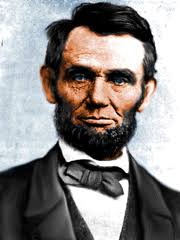
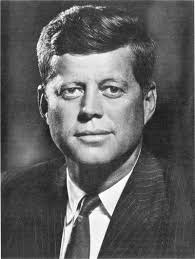
Abraham Lincoln & John F.Kennedy


Abraham Lincoln was elected to Congress in 1846.
John F. Kennedy was elected to Congress in 1946.

Abraham Lincoln was elected President in 1860.
John F. Kennedy was elected President in 1960.

Both were particularly concerned with civil rights.
Both wives lost their children while living in the White House.

Both Presidents were shot on a Friday.
Both Presidents were shot in the head

Now it gets really weird.

Lincoln ’s secretary was named Kennedy.
Kennedy’s Secretary was named Lincoln .

Both were assassinated by Southerners.
Both were succeeded by Southerners named Johnson.

Andrew Johnson, who succeeded Lincoln , was born in 1808.
Lyndon Johnson, who succeeded Kennedy, was born in 1908.


John Wilkes Booth, who assassinated Lincoln , was born in 1839.
Lee Harvey Oswald, who assassinated Kennedy, was born in 1939.

Both assassins were known by their three names.
Both names are composed of fifteen letters.

Now hang on to your seat.

Lincoln was shot at the theater named ‘Ford.’
Kennedy was shot in a car called ‘ Lincoln ‘ made by ‘Ford.’

Lincoln was shot in a theater and hi s assassin ran and hid in a warehouse.
Kennedy was shot from a warehouse and his assassin ran and hid in a theater.

Booth and Oswald were assassinated before their trials.

And here’s the kicker…

A week before Lincoln was shot, he was in Monroe , Maryland
A week before Kennedy was shot, he was with Marilyn Mon

Famously Wrong Predictions

Theoretically, television may be feasible, but I consider it an impossibility--a development which we should waste little time dreaming about.

- Lee de Forest, 1926, inventor of the cathode ray tube

I think there is a world market for maybe five computers.
- Thomas J. Watson, 1943, Chairman of the Board of IBM

It doesn't matter what he does, he will never amount to anything.
- Albert Einstein's teacher to his father, 1895

It will be years - not in my time - before a woman will become Prime Minister.
- Margaret Thatcher, 1974

This 'telephone' has too many shortcomings to be seriously considered as a means of communication. The device is inherently of no value to us.
- Western Union internal memo, 1876

We don't like their sound, and guitar music is on the way out.
- Decca Recording Co. rejecting the Beatles, 1962

Who the hell wants to hear actors talk?
- H. M. Warner, Warner Brothers, 1927

640K ought to be enough for anybody.
- Bill Gates, 1981

Louis Pasteur's theory of germs is ridiculous fiction.
- Pierre Pachet, Professor of Physiology at Toulouse, 1872

Computers in the future may weigh no more than 1.5 tons.
- Popular Mechanics, forecasting the relentless march of science, 1949

We don't need you. You haven't got through college yet.
- Hewlett-Packard's rejection of Steve Jobs, who went on to found Apple Computers

King George II said in 1773 that the American colonies had little stomach for revolution.

An official of the White Star Line, speaking of the firm's newly built flagship, the Titanic, launched in 1912, declared that the ship was unsinkable.

In 1939 The New York Times said the problem of TV was that people had to glue their eyes to a screen, and that the average American wouldn't have time for it.

An English astronomy professor said in the early 19th century that air travel at high speed would be impossible because passengers would suffocate.

Airplanes are interesting toys, but they have no military value.
- Marshal Ferdinand Foch in 1911

With over 50 foreign cars already on sale here, the Japanese auto industry isn't likely to carve out a big slice of the U.S. market.
- Business Week, 1958

Whatever happens, the U.S. Navy is not going to be caught napping.
- Frank Knox, U.S. Secretary of the Navy, on December 4, 1941

Stocks have reached what looks like a permanently high plateau.
- Irving Fisher, Professor of Economics, Yale University, October 16, 1929.
 

Knowledge Kings Copyright © 2009