Showing posts with label biography. Show all posts

Shiv Kumar Batalvi - BioGraphy

Shiv Kumar Batalvi was born on July 23, 1936 in Bara Pind Lohtian (Shakargarh tehsil), in Punjab (now Pakistan). His father was a Patwari by the name of Pandit Krishan Gopal. After the partition his family moved to Batala. As a child Shiv is said to have been fascinated by birds and rugged, thorny plants on the Punjabi landscape. Shiv was exposed to the ramlila at an early age, and it is to be expected that he received what was later to become his instinctive understanding of drama from these early performances.

Shiv passed his matriculate exams in 1953, from Punjab University. He went on to enroll in the F.Sc. programme at Baring Union Christian College in Batala. Before completing his degree he moved to S.N. College, Qadian into their Arts program. It is here that he began to sing ghazals and songs for his class-mates. Shiv never gave the final exams he needed to pass to receive his degree.

Around this period, he met a girl named Maina at a fair in Baijnath. When he went back to look for her in her hometown, he heard the news of her death and wrote his elegy 'Maina'. This episode was to prefigure numerous other partings that would serve as material to distill into poems. Perhaps the most celebrated such episode is his fascination for Gurbaksh Singh's daughter who left for the US and married someone else. When he heard of the birth of her first child, Shiv wrote 'Main ek shikra yaar banaya', perhaps his most famous love poem. It's said that when she had her second child, someone asked Shiv whether he would write another poem. Shiv replied 'Have I become responsible for her? Am I to write a poem on her every time she gives birth to a child?' Sounds much better in Punjabi (main oda theka leya hoyaa? Oho bacche banayi jave te main ode te kavita likhda rehma?).

In 1965 Shiv won the Sahitya Akademi award for his verse-drama Loona. He married on Feb 5, 1967. His wife Aruna was a Brahmin from Kir Mangyal in district Gurdaspur. By all accounts Shiv had a happy marriage. He had two children, Meharbaan (b. Apr. 12, 1968) and Puja (b. Sep. 23, 1969) whom he loved immensely.

By 1968 he had moved to Chandigarh, but both Batala and Chandigarh became soulless in his eyes. Chandigarh brought him fame, but scathing criticism as well, Shiv replied with an article titled 'My hostile critics'. Meanwhile his epilepsy got worse and he had a serious attack while at a store in Chandigarh's section 22. In the early 70's Shiv came to Bombay for a literary conference. In keeping with Shiv's outrageous behaviour there is a story about his trip to Bombay as well. Part of the conference involved readings at Shanmukananda hall. After a few people had read their work (one of whom was Meena Kumari), Shiv got on the stage and began "Almost everyone today has begun to consider themselves a poet, each and every person off the streets is writing ghazals". By the time he'd finished with his diatribe, there was not a sound in the hall. This is when he began to read 'Ek kuri jeeda naam mohabbat. gum hai, gum hai...'. There wasn't a sound when he finished either.

Shiv has been called a Bohemian. There were complaints about his drinking and some suggestions that his 'friends' had him drink so he would exhibit his outrageous self.

Shiv Kumar Batalvi died in the 36th year of his life on May 7, 1973 in his father-in-law's house at Kir Mangyal near Pathankot.

Super Star Rajini Biodata


Name of Super Star:Shivaji Rao Gaikwad
D.O.B of Super Star:12.12.1950
Time of Birth of Super Star:11:54 P.M.
Place of Birth of Super Star:Bangalore
Star/Rasi of Super Star:Sirvana/Magaram
Color of Super Star:Black
Name of Spouse of Super Star:Mrs.Latha Rajinikanth, Principal, The Ashram
Date of Marriage of Super Star:26.02.1981
Names of Children of Super Star:Aishwarya & Sowandarya
Address of Super Star:18, Raghava Veera Avenue, Poes Garden, Chennai-86
Father's Name of Super Star:Ramoji Rao
Mother's Name of Super Star:Rambhai
Brother's Name of Super Star:Sathya Narayana Rao & Nageshwara Rao
Guru of Super Star:K.Balachandar
Spiritual Guru of Super Star:Satchithananda Swamiji
Favourite God of Super Star:Shri Raghavendra
Favourite Books of Super Star:Books written by Shri Ramana Maharishi
Favourite City of Super Star:Chennai
Favourite Colour of Super Star:Black
Favourite Drinks of Super Star:Juice & Curd
Favourite Foods of Super Star:Chicken & Mutton items
Happiest Moments of Super Star:To be alone
Worst Moments of Super Star:Left the job of Conductor
Favourite Dress of Super Star:White Kurtha
Favourite Place of Super Star:Himalaya
Favourite Proverb of Super Star:Beware of Everything -that is un true; stick to the Truth shall succeed slowly but steadily
Favourite work of Super Star:Self-driving
Favourite Poet of Super Star:Kannadasan
Favourite Musician of Super Star:Illayaraja
Unforgettable Man of Super Star:K.Balachandar
Unforgettable Function of Super Star:Bassha Silver Jubilee Function
Unforgettable Friend of Super Star:Sri Priya
First Film of Super Star:Aboorva Ragangal
50th Film of Super Star:Tiger (Telugu)
100th Film of Super Star:Shri Raghavendrar
125th Film of Super Star:Rajathi Raja
150th Film of Super Star:Padyappa
Favourite Hollywood Actor of Super Star:Sylvester Stallone
Favourite Indian Actor of Super Star:Kamalhaasan
Favourite Actress of Super Star:Rekha (Hindi)
Favourite Songs of Super Star:Songs sung by Chandrababu
Favourite Film of Super Star:Veera Kesari (Kannada)
Most Valuable Item of Super Star:Appreciation Letter from K.Balachander for the film "Mullum Malarum"
Message to Fan of Super Star:Live & Let Live
About Rajinikanth of Super Star:I live for myself ; I don't care anybody but I respect everybody

He Was 150 films Acting in Successful To Moving
First Film of Super Star:Aboorva Ragangal
50th Film of Super Star:Tiger (Telugu)
100th Film of Super Star:Shri Raghavendrar
125th Film of Super Star:Rajathi Raja
150th Film of Super Star:Padyappa

Info about Azim Premji

Born: July 24, 1945
Achievements: Chairman of Wipro Technologies; Richest Indian for the past several years; Honored with Padma Bhushan in 2005.

Azim Premji is Chairman of Wipro Technologies, one of the largest software companies in India. He is an icon among Indian businessmen and his success story is a source of inspiration to a number of budding entrepreneurs.

Born on July 24, 1945, Azim Hashim Premji was studying Electrical Engineering from Stanford University, USA when due to the sudden demise of his father, he was called upon to handle the family business. Azim Premji took over the reins of family business in 1966 at the age of 21.

At the first annual general meeting of the company attended by Azeem Premji, a shareholder doubted Premji's ability to handle business at such a young age and publicly advised him to sell his shareholding and give it to a more mature management. This spurred Azim Premji and made him all the more determined to make Wipro a success story. And the rest is history.

When Azim Premji occupied the hot seat, Wipro dealt in hydrogenated cooking fats and later diversified to bakery fats, ethnic ingredient based toiletries, hair care soaps, baby toiletries, lighting products and hydraulic cylinders. Thereafter Premji made a focused shift from soaps to software.

Under Azim Premji's leadership Wipro has metamorphosed from a Rs.70 million company in hydrogenated cooking fats to a pioneer in providing integrated business, technology and process solutions on a global delivery platform. Today, Wipro Technologies is the largest independent R&D service provider in the world.

Azim Premji has several achievements to his credit. In 2000, Asiaweek magazine, voted Premji among the 20 most powerful men in the world. Azim Premji was among the 50 richest people in the world from 2001 to 2003 listed by Forbes. In April 2004, Times Magazine, rated him among the 100 most influential people in the world by Time magazine. He is also the richest Indian for the past several years. In 2005,Government of India honored Azim Premji with Padma Bhushan.

JRD Tata Biography

Born: July 29, 1904
Died: on November 29, 1993
Achievements: He had the honor of being India's first pilot; was Chairman of Tata & Sons for 50 years; launched Air India International as India's first international airline; received Bharat Ratna in 1992.

JRD Tata was one of the most enterprising Indian entrepreneurs. He was a pioneer aviator and built one of the largest industrial houses of India.

JRD Tata was born on July 29, 1904 in Paris. His mother was a French, while his father was Parsi. JRD's full name was Jehangir Ratanji Dadabhoy Tata and he was popularly known as Jeh to his friends. JRD's father Ratanji Dadabhoy Tata and Sri Jamsetji Tata shared their greatness from the same great-great-grandfather, Ervad Jamsheed Tata, a priest of Navsari.

JRD Tata was the second of four children. He was educated in France, Japan and England before being drafted into the French army for a mandatory one-year period. JRD wanted to extend his service in the forces but destiny had something else in store for him. By leaving the French army JRD's life was saved because shortly thereafter, the regiment in which he served was totally wiped out during an expedition in Morocco.

JRD Tata joined Tata & Sons as an unpaid apprentice in 1925. He has great interest in flying. On February 10, 1929, JRD became the first Indian to pass the pilot's examination. With this distinctive honor of being India's first pilot, he was instrumental in giving wings to India by building Tata Airlines, which ultimately became Air India. His passion for flying was fulfilled with the formation of the Tata Aviation Service in 1932.

In 1938, at the age of 34, JRD was elected Chairman of Tata & Sons making him the head of the largest industrial group in India. He started with 14 enterprises under his leadership and half a century later on July 26, 1988, when he left , Tata & Sons was a conglomerate of 95 enterprises which they either started or in which they had controlling interest.

JRD was the trustee of Sir Dorabji Tata Trust from its inception in 1932, which remained under his wings for over half a century. Under his guidance, this Trust established Asia's first cancer hospital, the Tata Memorial Center for Cancer, Research and Treatment, Bombay, 1941. It also founded the Tata Institute of Social Sciences, 1936 (TISS), the Tata Institute of Fundamental Research, 1945 (TIFR), and the National Center for Performing Arts.

In 1948, JRD Tata launched Air India International as India's first international airline. In 1953, the Indian Government appointed JRD as Chairman of Air-India and a director on the Board of Indian Airlines-a position JRD retained for 25-years. For his crowning achievements in Aviation, JRD was bestowed with the title of Honorary Air Commodore of India.

In 1956, JRD Tata initiated a program of closer "employee association with management" to give workers a stronger voice in the affairs of the company. He firmly believed in employee welfare and espoused the principles of an eight-hour working day, free medical aid, workers' provident scheme, and workmen's accident compensation schemes, which were later, adopted as statutory requirements in India.

JRD Tata cared greatly for his workers. In 1979, Tata Steel instituted a new practice; a worker is deemed to be "at work" from the moment he leaves home for work till he returns home from work. The company is financially liable to the worker if any mishap takes place on the way to and from work. Tata Steel Township was also selected as a UN Global Compact City because of the quality of life, conditions of sanitation, roads and welfare that were offered by Tata Steel.

JRD Tata received a number of awards. He received the Padma Vibhushan in 1957 on the eve of silver jubilee of Air India. He also received the Guggenheim Medal for aviation in 1988. In 1992, because of his selfless humanitarian endeavors, JRD Tata was awarded India's highest civilian honor, the Bharat Ratna-one of the rarest instances in which this award was granted during a person's lifetime. In the same year, JRD Tata was also bestowed with the United Nations Population Award for his crusading endeavors towards initiating and successfully implementing the family planning movement in India, much before it became an official government policy.

JRD Tata died in Geneva, Switzerland on November 29, 1993 at the age of 89. On his death, the Indian Parliament was adjourned in his memory-an honor not usually given to persons who are not Members of Parliament.

Source: iloveindia

Mahatma Gandhiji - Biography


Mahatma Gandhi popularly known as ‘Father of the Nation’ was one of the charismatic Indian leaders who fought for the freedom of the country. This great leader was born in Porbandar, Gujarat on Oct 2, 1869. He was the youngest of the three sons of Putlibai and Karamchand Gandhi. He completed his primary studies in Rajkot and was married to Kasturba at the age of 13.

In 1891, Gandhi went to London to study Law but after having admitted to Britisah bar he returned to India and began law practice in Bombay. After a span of two years he was called by an Indian company in South Africa to work as a legal advisor. There he found that he was ill-treated and abused because of inferior race and color discrimination. This was a common problem with all Indians. He then decided to throw himself into the freedom struggle to secure rights for Indian people. For this cause, Gandhi stayed in South Africa for almost 25 years.

Influenced by the Bhagvad Gita and Hindu beliefs, the Jain religion and the Christian teachings of Leo Tolstoy, Gandhi moved on the path of Satya and Ahimsa. ‘Satya’ meaning ‘truth’ and ‘ahimsa’ meaning ‘non-violence’ were the two weapons that Gandhi used to fight the enemy. He led the campaign in South Africa with the principle of Satyagraha for Indian rights and was arrested many times for his political activities. In 1914, many of Gandhi’s demands were accepted by the Government of the Union of South Africa. After his struggle in South Africa he returned to India and started Non-Cooperation movement there.

Gandhi, after returning to India inspired people to boycott British goods and refuse earthy possessions. This movement was known as Swaraj and was economically significant because Indian home industries were virtually destructed by British industrialists. He advocated renewal of native Indian industries and began to use a spinning wheel as a token of return to simple village life. Thereafter, he constantly began promoting satyagraha, non-violence, non-cooperation and swaraj to achieve independence. Finally, in August 1947, the British were forced to leave India.

Mahatma Gandhi, symbol of Free India, was assassinated by Nathuram Godse in January 1948. His mortal frame has already turned into ashes years ago but he still lives in the hearts of millions of people. Mahatma Gandhi, an embodiment of eternal love and truth, will live for immortal ages.

Netaji Subhas Chandra Bose - Biography


Subhas Chandra Bose is one of those great freedom fighters who martyred their lives for India’s independence. He is popularly known as Netaji because he was considered to be a born leader. He was born on January 23, 1897 in Cuttack, Orissa. And was the ninth child of a famous lawyer Janaki Nath Bose and a religious lady Prabhavati Devi. He completed his graduation in Calcutta and went to England in 1919 to appear for Indian Civil Service Examination and achieved fourth place on merit.

Filled with the feelings of patriotism, Bose was resolved to drive British out of the country. When in England, he was shaken by the incident of Jalianwala Bagh massacre and returned back to India in 1921. Under the influence of Mahatma Gandhi he joined the Indian National Congress and actively participated in Civil Disobedience Movement in 1930.

Subash along with Tilak and Auribindo were not convinced with Gandhi Ji’s method of achieving independence. They were in favor of armed revolution and Netaji strongly believed that the only way to earn freedom was by shedding blood. With this strong belief, he involved himself in various revolutionary activities for which he was imprisoned many times.

In 1938, Subash was elected as the President of All India Congress. At the time of World War II, Gandhi and Nehru did not support him for armed revolution and so he escaped to Germany to approach Hitler for help. Being impressed by Netaji, Hitler helped him to organize the Indian National Army with the soldiers of the prisoners of war. On October 21, 1943, Subash declared the formation of Azad Hind Government and hosted the Indian National Flag in Kohima, Assam on March 18, 1944.

In August 1945, Japan surrendered the territory and somehow Netaji escaped from there. He left in a war plane to an undisclosed destination and expired due to plane crash on August 17, 1945.

Bhagat Singh- Biography


Bhagat Singh, a symbol of heroism, was born in a Sikh family in Layalpur, Punjab on September 27, 1907. He was a national hero who gave a new wave to the revolutionary movement in India. His only goal in life was the destruction of British Empire.

Bhagat started his education in DAV School in Lahore but was not able to complete his studies because he was highly disturbed and influenced by the Jalianwala Bagh massacre at the age of 12. His desire to drive British out from India became stronger and he joined the Non-Cooperation Movement called by Gandhi Ji in 1921. The incidence of Chauri-Chaura in Gorakhpur made Bhagat violent and he decided to earn freedom with armed revolution rather than non-violence. He then joined the National College in Lahore, a center of revolutionary activities.

To spread message of revolution in Punjab, Bhagat formed a union of revolutionaries by the name ‘Naujavan Bharat Sabha’ and gave a call for mass mobilization. In 1928, he went to Delhi to attend a meeting of revolutionaries’ and there he came in contact with Chandrashekhar Azad. With a common aim to establish republic in India they both formed ‘Hindustan Samajvadi Prajatantra Sangha’. There were protests against of Simon Commission visit to India and in this protest Lala Lajpat Rai was brutally lathi charged and later on he died. This added to the anger and discontent of Bhagat and he was determined to kill the British official and Deputy Inspector General Scott responsible for the death of Lala Lajpat Rai. By mistake, he killed assistant superintendent Saunders and ran from Lahore to escape punishment. He threw a bomb in the Central Legislative Assembly on April 18, 1929 and was sentenced to death on March 23, 1931.

Though dead, Bhagat Singh is still living in the history of humanity and remembered as a prominent face of the freedom struggle.

Mukesh Ambani-Biography


Born: April 19, 1957

Achievement: Chairman and Managing Director of Reliance Industries Limited, India's largest private sector company; Chosen as ET Business Leader of the Year 2006; Ranked 42nd among the World's Most Respected Business Leaders and second among the four Indian CEOs featured in a survey conducted by PricewaterhouseCoopers and published in Financial Times, London, November 2004.

Mukesh Ambani is the face of new emerging India. He is the Chairman and Managing Director of Reliance Industries Limited, India's largest private sector company.

Mukesh Ambani was born on April 19, 1957 in Mumbai. His father Dhirubhai Ambani was then a small businessman who later on rose to become one of the legends of Indian industry. Mukesh Ambani did his Bachelors in Chemical Engineering from University of Bombay and Masters in Business Administration from Stanford University, USA.

Mukesh Ambani joined Reliance in 1981 and was the brain behind Reliance's backward integration from textiles into polyester fibres and further into petrochemicals. During the process of backward integration, Mukesh Ambani led the creation of 51 new, world-class manufacturing facilities involving diverse technologies that raised Reliance's manufacturing capacities manifold.

World's largest grassroots petroleum refinery at Jamnagar is the brainchild of Mukesh Ambani. He was also the incharge of Dhirubhai's dream project Reliance Infocomm. But after the split in the Reliance Empire, Reliance Infocomm went to his brother Anil Ambani. Mukesh Ambani is now planning to enter retail sector in a big way. He has plans to establish big retail stores all over the country. Recently, he also entered into an agreement with Haryana Government to establish a Special Economic Zone (SEZ) with an investment running into thousands of crores.

Mukesh Ambani has many achievements and honours to his name. Mukesh Ambani was chosen as the ET Business leader of the Year 2006. He was ranked 42nd among the World's Most Respected Business Leaders and second among the four Indian CEOs featured in a survey conducted by PricewaterhouseCoopers and published in Financial Times, London, November 2004. He was conferred the World Communication Award for the Most Influential Person in Telecommunications in 2004 by Total Telecom, October, 2004. Mukesh Ambani was also conferred the Asia Society Leadership Award by the Asia Society, Washington D.C., USA,

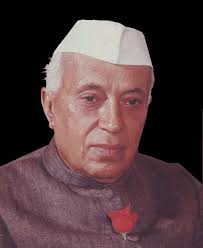
Short Biography Of Nehru


Born on November 14, 1889 in Allahabad, Jawaharlal Nehru was the first Prime Minister of India. The only son of Motilal Nehru and Swarup Rani was a patriot, a freedom fighter and the most highly respected personality. He completed his early education in a boarding school in England. For higher studies he went to Cambridge University and returned to India in 1912 as a barrister. Just after his studies, in 1916 he got married to Kamala Kaul.

Nehru was an intellectual with strong feelings of patriotism, liberty and unity. Being highly influenced by Gandhi Ji, he wanted to join the freedom struggle. During the struggle he was imprisoned several times. He had spent almost 14 years of his life in prison. For consequently 5 times he was elected as the President of Indian National Congress and under his influence Congress adopted the goal of complete independence. After centuries of struggle, India became independent in 1947 and soon after that Nehru was appointed as the first Prime Minister of the country.

Even after independence he had served the country that had left a profound influence on the social structure, intellectual development and overall development of the country. He is said to be the architect, the maker of modern India. On May 27, 1964 India lost its architecture.

Dr.APJ.Abdul Kalam-Biography


Born - 15 October 1931
Achievements - This eminent scientist and engineer has also served as the 11th President of India from the period 2002 to 2007. APJ Abdul Kalam is a man of vision, who is always full of ideas aimed at the development of the country. He firmly believes that India needs to play a more assertive role in international relations.

Apart from being a notable scientist and engineer, Dr APJ Abdul Kalam served as the 11th President of India from the period 2002 to 2007. He is a man of vision, who is always full of ideas aimed at the development of the country and is also often also referred to as the Missile Man of India. People loved and respected Dr APJ Abdul Kalam so much during his tenure as President that was popularly called the People's President. Read more about the biography of Dr APJ Abdul Kalam here.

APJ Abdul Kalam was born on 15 October 1931 at the South Indian state of Tamil Nadu and received honorary doctorates from about 30 universities globally. In the year 1981, the Government of India presented him the nation's highest civilian honor, the Padma Bhushan and then again, the Padma Vibhushan in 1990 and the Bharat Ratna in 1997. Before Kalam, there have been only two presidents - Sarvepalli Radhakrishnan and Zakir Hussain - to have received the Bharat Ratna before bring appointed to the highest office in India.

Read on about the life history of Dr APJ Abdul Kalam, who's also the first scientist and bachelor to occupy the seat of the Rashtrapati Bhavan. His perspectives on important topics have been enunciated by him in the book 'India 2020'. It highlights the action plans that will help develop the country into a knowledge superpower by the time 2020. One thing for which he received ample kudos is his unambiguous statement that India needs to play a more assertive role in international relations.

And Dr APJ Abdul Kalam regards his work on India's nuclear weapons program as a way to assert India's place as a future superpower. Even during his tenure as President, APJ Kalam took avid interest in the spheres of India's science and technology. He has even put forward a project plan for establishing bio-implants. He is also an ardent advocate of open source software over proprietary solutions to churn out more profits in the field of information technology in India.

Annie Besant - BioGraphy


A great woman, patriot and a true fighter, Annie Besant, was born in London on October 1, 1847. She was the daughter of an Irish businessman, William Press Wood and an Irish woman, Emily Mary Ruche. Annie was given private education and later in 1867 got married to an Anglican clergyman, named Frank Besant. At the age of 23, Annie had two children but the marriage proved to be a failure and they got divorced in 1873.

In 1870, Besant along with Charles Bradlaugh edited the weekly National Refomer. This weekly was dedicated to spread the ideas of birth control, trade unions, women’s right and national education. In 1888, she organized a strike for female workers in a London based company who were working more than they were paid and were highly affected by the factory fumes. The strike proved to be successful and she became more dedicated to women’s sufferings and rights.

In 1875, Annie joined the religious movement, Theosophy that was based on Hindu ideas of karma and reincarnation. Completely involved in the Hindu beliefs, she widespread the ideas around the world. India was one country with maximum Hindus and so she visited the country in 1983 to spread the ideas and principles of Theosophy. Later on, she settled down in India with her girl child whom she brought along with her during divorce.

During her stay in India she was actively involved in the Indian Nationalist Movement and Home Rule League. Like Gandhiji she was not fully satisfied with non violence, so being a good orator she tried to put influence on Indians by her speeches and write ups.

Fighting for a noble cause she expired in India on September 20, 1933.
 

Knowledge Kings Copyright © 2009